FunXplore Kids Sandboxes Built for Backyard Reality
FunXplore's sandbox line is built for kids ages 3–12 and designed to stay outside through full seasons — fir wood construction, adjustable canopy coverage, bottom liners, and lids that keep the sand clean when no one's playing. The line spans compact single-sandbox footprints to large octagonal family pits and 2-in-1 picnic table conversions, so there's a configuration that fits the yard and the crew.

Every Sandbox Model in the FunXplore Line
PD-1023B Sandbox with Canopy Benches
See on Amazon
PD-1020 Octagonal Family Sandbox
See on Amazon
PD-1021 Sandbox Picnic Table Combo
See on Amazon
PD-1022 Sandbox Picnic Table Cedar
See on AmazonSee more products
Discover the full product lineup with current selection on Amazon.
All products on AmazonFunXplore Sandbox Specs Side by Side
The four models in the FunXplore sandbox line differ in shape, footprint, height, and what they convert into when not in use. This table covers the key specs for direct comparison.
| Model | Dimensions (L×W×H) | Shape | Canopy / Cover | Secondary Function | Age Range | Best For |
|---|---|---|---|---|---|---|
| Square Sandbox with Canopy & 2 Benches (B0F2SHWVL3) | 47×47×50 in | Square | Adjustable canopy (37.8–50.8 in height) + wooden lid | Benches fold out from sides | 4–8 | Compact yards, full shade coverage, dedicated sand play station |
| Large Octagonal Sandbox with Canopy (B0CSG8S17B) | 43×26×29 in | Octagon | Canopy + cover included | Family-scale perimeter seating; fits parents & kids simultaneously | 3–12 | Wider age range, family play with adult participation, open perimeter yards |
| 2-in-1 Sandbox with Picnic Table & Canopy (B0F2LS5LNB) | 76.4×47.2×51 in | Rectangle | Adjustable canopy + wooden cover | Converts to full picnic table seating for 2–6 kids | 4–8 (seats up to 6) | Patios where a single structure serves both play and mealtime; largest footprint in the line |
| Sandbox with Picnic Table, No Canopy (B0DYVJTSNL) | 72.2×47.2×17 in | Rectangle | Wooden lid (no canopy) | Converts to picnic table for 2–6 kids | 4–8 (seats up to 6) | Covered patios or shaded yards where canopy isn't needed; low-profile table height |
If shade is a priority and your yard gets direct afternoon sun, choose either canopy model (B0F2SHWVL3 or B0F2LS5LNB); if the sandbox lives under a covered patio or mature tree, the picnic table model without canopy (B0DYVJTSNL) removes the canopy cost without losing any play or seating function. The octagonal model (B0CSG8S17B) is the only one designed around adult participation — if that's part of how your family uses outdoor time, it's the clear choice regardless of yard size.
Which FunXplore Sandbox Actually Fits Your Situation
The first decision is footprint. The square sandbox with canopy and benches (47×47 inches) and the picnic table model (72.2×47.2 inches) both assume a defined, roughly rectangular space. The octagonal model (43 inches across) suits tighter or irregularly shaped yards where a square corner would be awkward. The 2-in-1 picnic table sandbox at 76.4×47.2 inches is the largest in the line — plan a clear 7-foot run of yard for it, plus walking room around all sides.
The second decision is how the sandbox will be used when it's not a sandbox. The two picnic table models (ASIN B0F2LS5LNB and B0DYVJTSNL) convert to functional seating for 2–6 kids — genuinely useful for snack time, crafts, or giving older kids a reason to be near younger siblings playing in the sand. The square canopy model's benches fold out but stay as bench seating, not a table surface. The octagonal model is a dedicated sandbox — no conversion, but it's the one designed to fit parents alongside kids, which the others aren't built around.
Age range matters too. The octagonal model is rated for ages 3–12 and explicitly sized for family play, including adults sitting at the rim. The square and picnic table models target ages 4–8 for the core play scenario. If you have a wide range of kids — a 3-year-old and a 10-year-old sharing the same sandbox — the octagonal model's 43-inch width and open shape accommodates that better than the taller, more enclosed canopy designs.
- Compact backyard, one or two kids ages 4–8: Square sandbox with canopy and benches (47×47 inches, ASIN B0F2SHWVL3)
- Need a sandbox that doubles as a table for meals and activities: Picnic table sandbox without canopy (72.2×47.2 inches, ASIN B0DYVJTSNL) or the 2-in-1 with canopy (76.4×47.2 inches, ASIN B0F2LS5LNB)
- Larger group or mixed ages including adults: Octagonal sandbox with canopy (43 inches across, ASIN B0CSG8S17B)
- Want full shade coverage and the most complete feature set: Either canopy model — adjustable canopy height up to 50.8 inches on the square model gives meaningful coverage for kids standing up
Real Setups and Who Each Configuration Suits
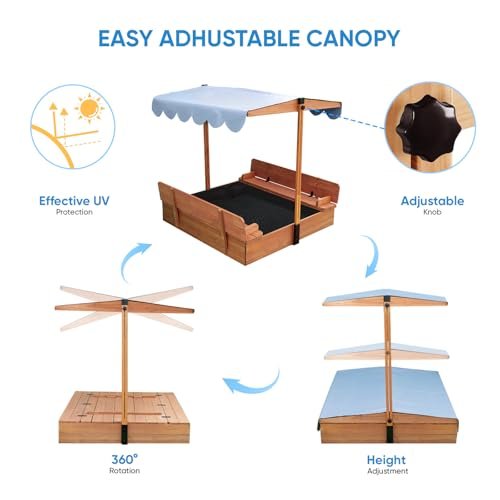
The square sandbox with adjustable canopy (47×47 inches) works best as a dedicated sand play station on a patio, deck edge, or grass area where you want the canopy doing real work against afternoon sun. The canopy adjusts from 37.8 to 50.8 inches, which means it provides usable shade for kids standing inside, not just seated — a meaningful difference from fixed-height canopies that only cover a seated child. The benches fold out from the sides, so the full footprint expands slightly during play. Budget roughly 2–3 hours for assembly with basic tools and a second adult on hand.
The two picnic table models are the right choice when outdoor seating is as important as sand play. At 72.2×47.2 inches (picnic table, no canopy) and 76.4×47.2 inches (2-in-1 with canopy), both are long enough to seat 2–6 kids across two benches when the sandbox lid closes over the sand pit. These work especially well on larger patios where parents want a single multi-use structure rather than separate sandbox and table furniture. Note that the picnic table model without canopy (B0DYVJTSNL) sits low at 17 inches — it's closer to a toddler play table height than a standing sandbox, so verify that height works for your kids before choosing it over the taller canopy version.
The octagonal sandbox stands apart from the other three because of its explicit family-scale design. At 42 pounds and 43 inches across, it's large enough for an adult to sit at the rim and play alongside a toddler — something the square and picnic table models don't invite. It's also the only model in the line with a 1-year manufacturer warranty on record. For families where supervised sand play is part of the routine — not just leaving kids to it — the octagonal shape and open perimeter make it practical for two adults to monitor from opposite sides simultaneously.
Keeping a Wooden Sandbox in Good Shape Season to Season
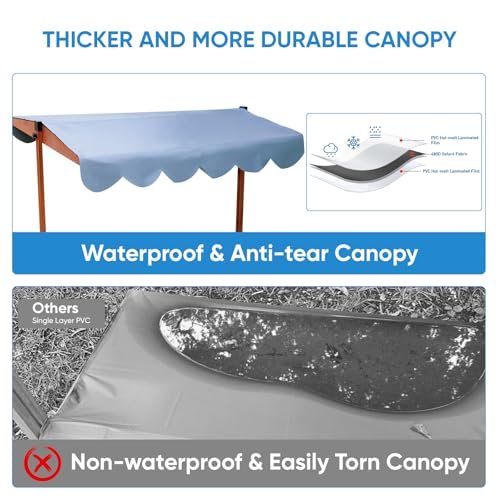
Every FunXplore sandbox uses fir wood with an eco-friendly water-based stain. Fir holds up well outdoors, but "holds up well" is not the same as "needs nothing." Before the first winter — or at the end of the first summer — apply a coat of exterior wood sealant to the side panels, bench surfaces, and especially the lid edges where water tends to pool. The lid and canopy do their job keeping rain off the sand; the wood frame still benefits from an annual protective coat to prevent grain-raising and surface cracking over multiple seasons.
The bottom liner is one of the most practically important features in the line and one that's easy to take for granted. It keeps the sand from contacting soil directly, which matters for two reasons: it slows drainage of contaminated groundwater into the play area, and it creates a barrier against insects, worms, and burrowing pests working their way up from below. Inspect the liner at the start of each season — any tears should be patched or the liner replaced before refilling. The lid and cover function together with the liner as the sandbox's contamination defense; neither one alone is enough.
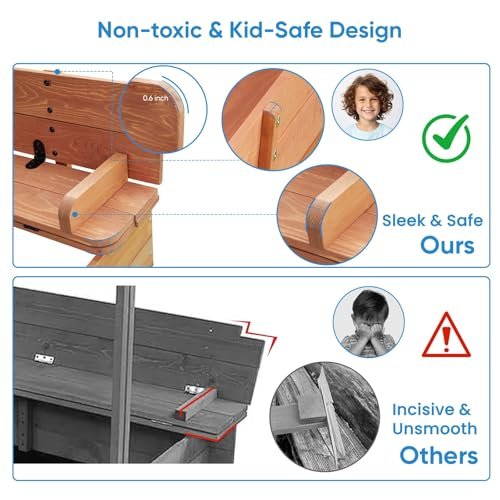
- Rounded edge check: Run a hand along all bench and lid edges after winter storage. Any rough spots from moisture-driven grain-raising can be addressed with a light sanding before kids use the sandbox again.
- Sand refresh: Replace or top off the sand annually. Compacted, weathered sand loses its play quality and can harbor more bacteria than fresh play sand. Use washed, kiln-dried play sand — not construction or beach sand.
- Canopy hardware: The adjustable canopy on the square and 2-in-1 models has height-adjustment hardware that should be checked for tightness at the start of the season. A canopy that shifts in the wind is a stability hazard — make sure all locking points are fully seated before kids use it.
- Lid use discipline: The lid and wooden cover are only effective if they're used consistently. Sand left uncovered overnight in warm months is an invitation for neighborhood cats to treat the sandbox as a litter box — something that's easy to prevent and difficult to remediate once it happens.
- Placement on level ground: All four models should sit on level ground or grass, not on sloped surfaces where one leg or edge bears uneven load. On grass, check yearly that root growth or ground settling hasn't tilted the frame.
Frequently Asked Questions
How long does assembly actually take for these sandboxes?
Plan on 2–3 hours for the square and octagonal models with one other adult helping. The larger picnic table models — at 72 and 76 inches long — involve more panels and hardware and will realistically take closer to 3–4 hours for most adults who aren't experienced with furniture assembly. Have a power screwdriver and a rubber mallet available; hand-tightening every screw on the larger models adds significant time. Read through the full instructions before starting and lay out all hardware by type — FunXplore includes all components, but sorting them beforehand saves time mid-build.
Will the wood hold up after multiple winters outside?
Fir wood handles outdoor exposure better than pine, but it's not maintenance-free. Owners report the sandboxes hold up well through the first full year without any additional treatment. To get multiple seasons without warping or cracking, apply a coat of exterior wood sealant — particularly on the lid edges, bench surfaces, and any end-grain exposure — before the first winter. The canopy protects the sand; the wooden panels need your help. An annual sealant coat adds seasons to the structure's life. Store the canopy fabric indoors during winter if you're in a climate with heavy snow or ice, since the canopy's job is rain and UV, not structural snow load.
What kind of sand should I use, and how much does it take to fill one of these?
Use washed, kiln-dried play sand — available at hardware stores and home improvement retailers. Avoid construction sand (too coarse and may contain contaminants) and beach sand (salt content, variable contamination). For the 47×47-inch square model, 200–250 lbs of sand fills it to a usable depth of about 6–8 inches. The larger picnic table models hold more but are shallower by design; 150–200 lbs is typically sufficient. The octagonal model sits between those ranges. Check the product listing for any sand weight guidance FunXplore provides — over-filling puts extra stress on the liner and frame joints.
Can cats use the sandbox as a litter box if the lid is left open overnight?
Yes, and it's one of the most common complaints across wooden sandboxes in general — not specific to FunXplore. The lid and wooden cover are the complete solution, and they only work if you use them consistently. Any sandbox left uncovered overnight in warm months in a yard with outdoor cat access is at risk. Both the square canopy model and the picnic table models include a wooden cover specifically for this reason. Make covering the sandbox at the end of each play session a habit from day one — it takes ten seconds and prevents a contamination problem that's genuinely difficult to fix once it happens.
Is the canopy adjustable enough to actually shade kids who are standing up inside?
On the square model (B0F2SHWVL3) and the 2-in-1 picnic table model (B0F2LS5LNB), the canopy adjusts up to 50.8 inches — about 4 feet 3 inches at its highest. That provides meaningful shade for kids aged 4–8 whether seated or standing. The adjustment range (37.8 to 50.8 inches) also lets you lower the canopy in windy conditions to reduce the sail effect on the frame. The octagonal model's canopy doesn't list the same adjustment spec — confirm the canopy height details on the product listing before purchasing if standing coverage is a firm requirement for your setup.
Do the picnic table models work as a real table, or is it more of a marketing claim?
The conversion is functional, not gimmicky. When the wooden lid closes over the sand pit, the benches on both sides seat kids for meals, crafts, or homework — 2–6 kids depending on ages and sizes. The 72-inch length (B0DYVJTSNL) gives meaningful table surface area. What it isn't: a dining table height for adults. The models are sized for kids, and the table surface sits at a height proportional to child seating, not adult seating. For families where the sandbox lives on a patio and needs to earn its footprint during non-play hours, the conversion is genuinely useful. For families where the sandbox will always just be a sandbox, the canopy-only square model or the octagonal model is the simpler choice.